

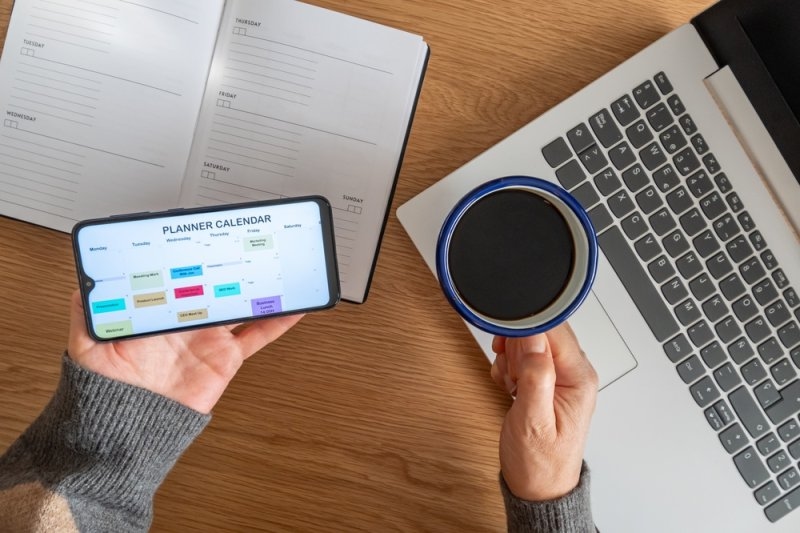
The best productivity apps can help busy days feel more manageable by putting everything from to-dos, reminders, and notes in one centralized place. The best productivity apps for work, school, or your everyday schedule vary depending on what you struggle with most.
Several of the productivity apps listed also incorporate AI to take care of the work that's dragging you down.
There's not one perfect app for everyone. The best productivity apps are for staying organized and doing a particular job without complicating your life. Ask yourself if you're looking for task management, time tracking, note-taking, collaboration, or focus.
Todoist is a simple tool for anyone seeking productivity apps for task management. You can create projects, set dates and times for your deadlines, prioritize tasks, and compartmentalize duties into lists. The interface is clean and works just as well for planning out your personal life as it does for productivity apps for your job.
It is also helpful when planning out each day, as you can see what is coming up. If you're looking for the best productivity apps to help you accomplish more, a simple task manager can help you make sure smaller tasks don't get lost in a hectic day.
Notion integrates notes, data management, project management, calendars, and docs in one flexible platform. This is arguably one of the more versatile productivity tools for individuals looking to build out their own personalized workflow.
It may also be a good addition to the productivity apps for students. You can group assignments, class notes, reading lists, project due dates, and study schedules all in one place. Its more flexible nature, however, requires that you don't spend more time decorating the pages than working on them.
Microsoft 365 is the choice when a work productivity app has to deliver documents, spreadsheets, email, meetings, and collaboration. The connected nature of the product eliminates the requirement to transfer data across multiple standalone systems.
Especially useful for teams that require several team members to edit documents, send messages, schedule meetings, and organize projects. Seamlessly connected productivity tools help make work life easier, all while keeping critical information in the tools you already love.
Google Calendar is one of the best productivity apps for time management, as it can help you visualize your appointments, meetings, and deep work sessions in blocks of time. Rather than scribbling a to-do list, you're setting the schedule.
That's why it makes time blocking so handy for planning applications to use on a daily basis. If your calendar is entirely occupied, this view can help you quickly see.
Forest has a more playful take on productivity, with Pomodoro-style work periods. You start a session and then remain off your phone while a virtual tree grows.
The Pomodoro technique (may be effective). It is one of the most popular applications for productivity and better concentration, although it may not be effective if your phone is constantly buzzing and throwing you off track. It is most effective when used in conjunction with a manageable to-do list.
The app will be part of your daily routine, so compatibility between devices is important. A good productivity app will ensure syncs between them so you can access your to-dos, notes, and appointments.
Decent Productivity Apps for iPhone and for Android. There are many productivity apps for iPhone and productivity apps for Android. Make sure that the app is supported for your device before you install it. Also make sure that you have reliable synchronization, that it can work offline, and that the notifications are useful and not distracting.
AI productivity apps aren't just about writing. On some platforms, AI can take notes for you, summarize meetings, organize data, compose email drafts, pick out the key points, create a to-do list, and automate the more boring parts of a process.
The trick is to leverage AI where it really helps you save time. In many cases, it's worth auto-drafting lengthy, detailed meeting minutes. But for a task that takes seconds, you might do better to keep it simple.
Free productivity apps that offer too many features can be overwhelming. The most useful free productivity app is one that provides you with just enough features to meet your needs. And that doesn't annoy you by nagging you to upgrade.
Seek out helpful task limits, reminders, synchronization, mobile capability, and collaboration features. Ease of use is important too. An easy-to-use product you can access on a daily basis may be more effective than a complex one you don't use often.
Purposefully use your productivity tools. Use one primary task manager rather than saving to-do items in multiple apps. Track appointments and time commitments in your calendar; store notes in a central, dependable place.
This post is sponsored content. Time to declutter the mind. Clearing your tasks regularly, deleting expired ones, and having a solid deadline will help make these apps so much more useful.
If you know what needs to happen, when it has to happen, and what can wait, it becomes much easier to plan your day. A task manager with a calendar can give you this without the complexity.
Complete the following workday before you finish your workday; get a head start on the next day. Put down the most essential items to be accomplished, break down how much time you anticipate them to take, and allow for some unanticipated tasks.
Read Further: The Future of Artificial Intelligence: What You Need to Know
The right productivity apps for you are going to align with your current work practice—if it's not easy and familiar, you're not going to stick with it. To figure out where to start, take a step back and figure out your most critical challenge.
Consider these factors before making your choice for the best productivity apps for managing tasks:
Various purposes. These apps also serve different purposes, so we will be better off with one or two applications that we want to fit into our daily lives than with seven applications that make us install them, making us just another system to keep.
The most popular productivity apps aren't necessarily the ones with the most features. They're the ones that eliminate the friction from your life and allow you to be better with your time, tasks, data, and attention.
No matter what kind of productivity apps for improving focus, work, school, and planning you need, begin with the problem.
Yes, productivity apps may help plan and manage things, but in a very good combination with regular habits. An app can list tasks and send you reminders of what has to be done, but that is what you'll have to do.
Begin with one main task manager and one calendar. Only introduce a different productivity system if there is a new need you can no longer address with your current method. This way you don't run the risk of sharing information all over the place.
Most free apps offer features for individual use. A simple task list and reminders, calendars, notes, and synchronization may be all you need. Paid plans are a good choice when there's a real limitation that premium features can fix.
What should students look for: easy task management, due date notifications, calendar sync, note organization, and cross-device accessibility. The best choice should make managing assignments and schedules easier, not more burdensome.
These are helpful if they save you time (or can write content for you). AI can summarize information, sort data, compose common emails, and automate simple tasks. But you need to check what the AI produces and not add a new tool just because everyone else is doing it.
This content was created by AI